The newest type of iguana discovered in the Galápagos Islands is the Galápagos pink land iguana (Conolophus marthae). These pink beauties are only found on the slopes of Wolf Volcano on Isabela Island.
This is another interestingly colored iguana species. Green iguanas (Iguana iguana) appear green due to xanthophores (yellow pigment) and iridophores (blue-reflecting crystals). Yellow and blue make green! These are types of pigment cells called chromatophores. They also have melanin-containing melanophores that aid in body temperature regulation.
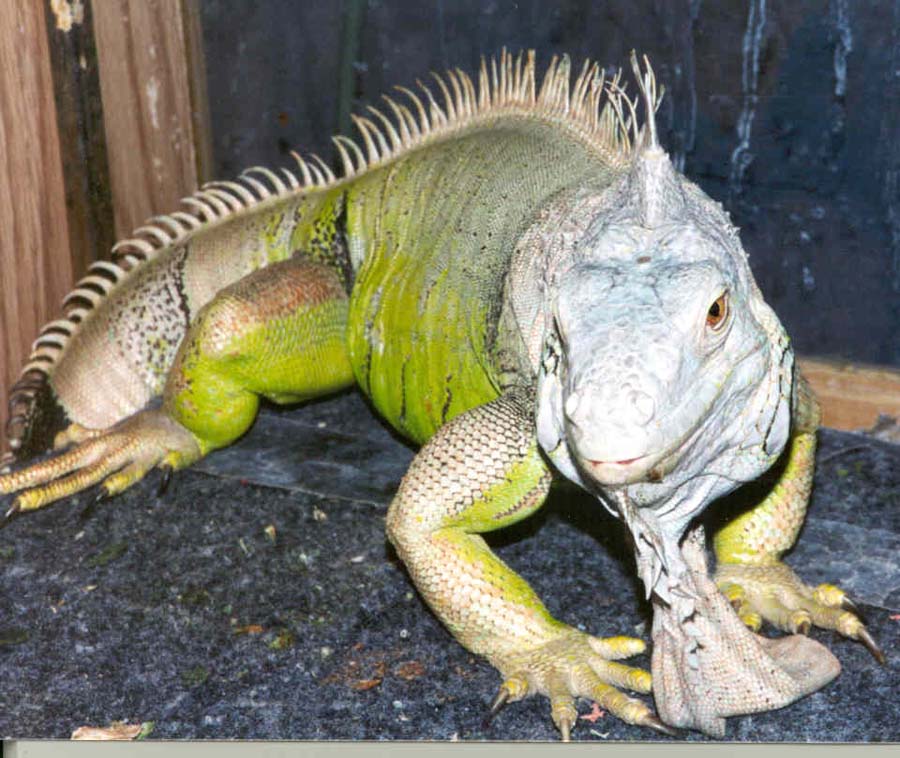
My green iguana, Algae.
Another colorful lizard is the Grand Cayman Blue Iguana (Cyclura lewisi). As mentioned above, there is actually no blue pigment. These lizards appear blue strictly due to the blue-reflecting crystals in their iridophores.
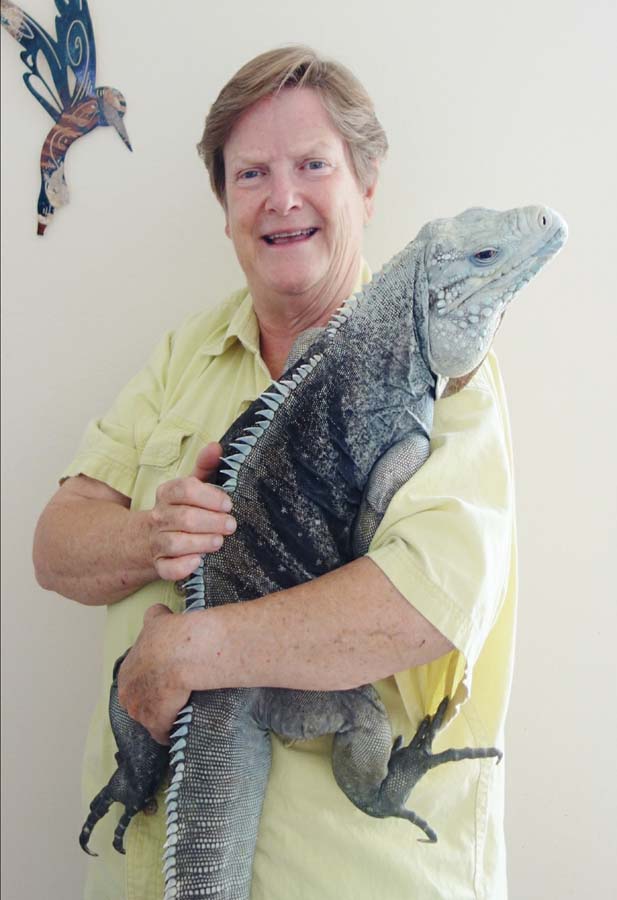
This is Blue, my Grand Cayman blue iguana hybrid. He was my favorite spokeslizard, and I absolutely loved his sky-blue coloring.
The Secret Behind the Pink
Why are the Galápagos pink iguanas pink? Is it due to a red pigment-containing chromatophore? Reptiles do use pteridines and carotenoids as red and orange pigments, but not in this case!
The pink color is actually due to a total lack of skin pigment. Super-thin skin reveals the blood flowing in the capillaries beneath, which is visible right through their translucent scales! Being transparent like this is truly unique among reptiles.
What’s odd is that only the adults are pink. Baby pink iguanas are born green, which helps them hide from predators. As they get larger, these juvenile pigments fade. Scientists believe this lack of pigmentation helps the iguanas tolerate the extreme solar radiation they’re exposed to on the slopes of Wolf Volcano.
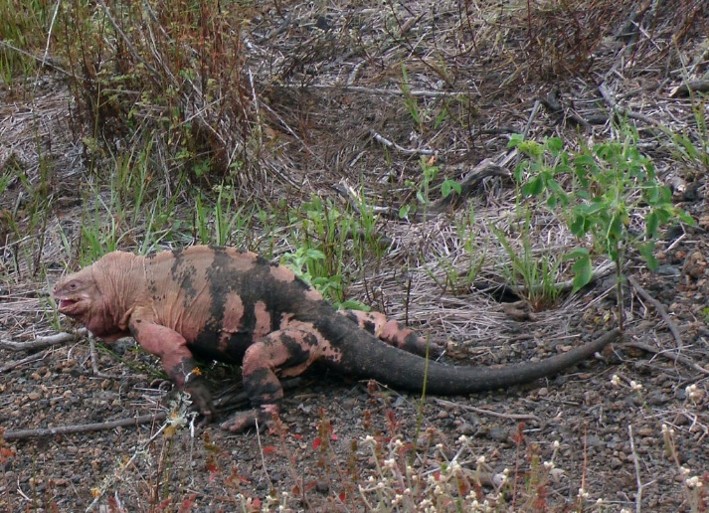
Photo of the Galápagos Pink Land Iguana, courtesy of the International Iguana Foundation.
Sharing Traits with the Wild
I, too, have a lack of pigment in my skin, and I’m thrilled to have something in common with the amazing pink iguana! When I’m exercising or enjoying hot temperatures, a lot of blood rushes to the capillaries near the surface of my skin. People often think I’m severely sunburned or about to drop over dead, but I’m perfectly fine. My pink color is merely my circulatory system doing its job.
I’m very excited to know I share so much in common with an amazing iguana species. I know I won’t be able to see one in the wild in my lifetime, but that’s okay. Knowing that I share a biological trait with them is more than enough.
Bring the Animal Kingdom to Your Classroom!
Want to introduce your children or students to more fascinating, real-world animal adaptations? Check out my downloadable science workbooks for elementary-age kids to spark their curiosity about the natural world.