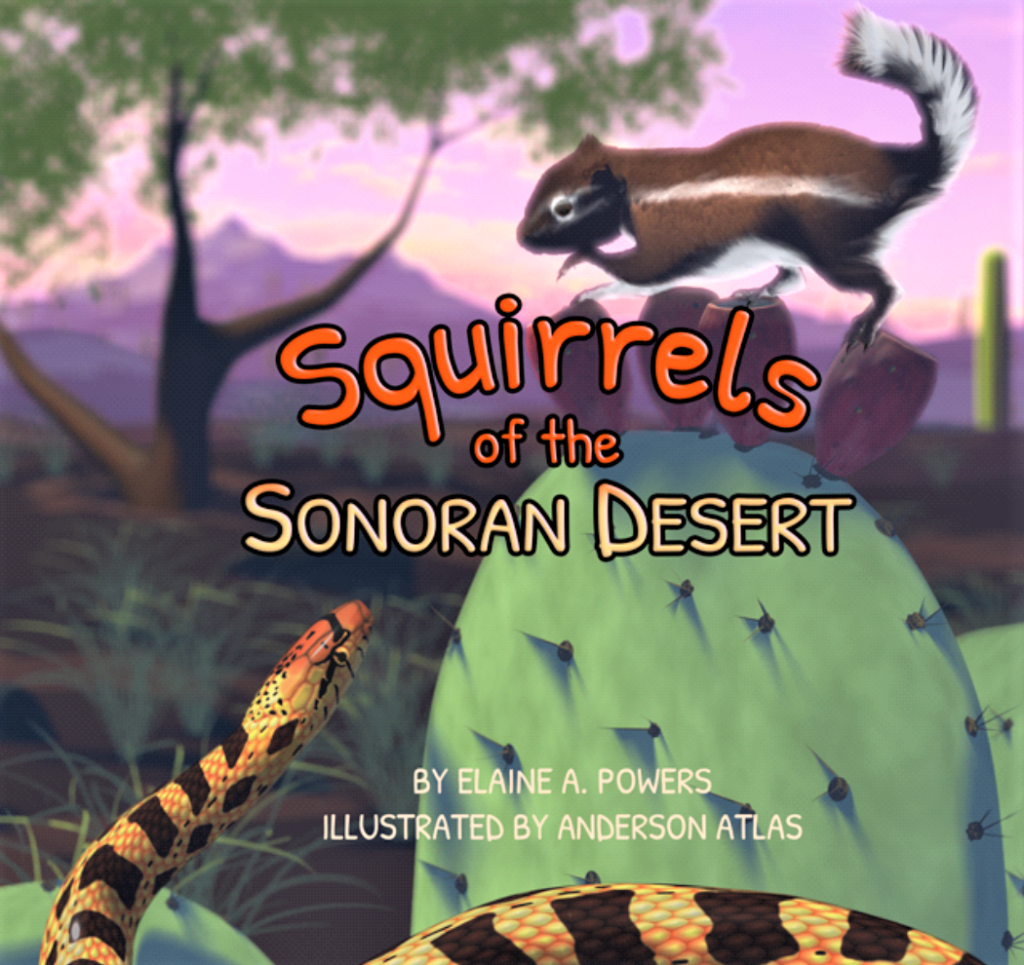
I’m very fond of ground squirrels. Even though I grew up with tree squirrels in central Illinois, I’ve come to adore the ground squirrels of the Sonoran Desert. I became familiar with the three desert species when I was asked to write a book about them. They really are fascinating and remarkably well-adapted to surviving in a harsh desert environment. They will even kill rattlesnakes that attempt to prey on them and end up eating them—now those are tough squirrels!
A Coastal Discovery in California
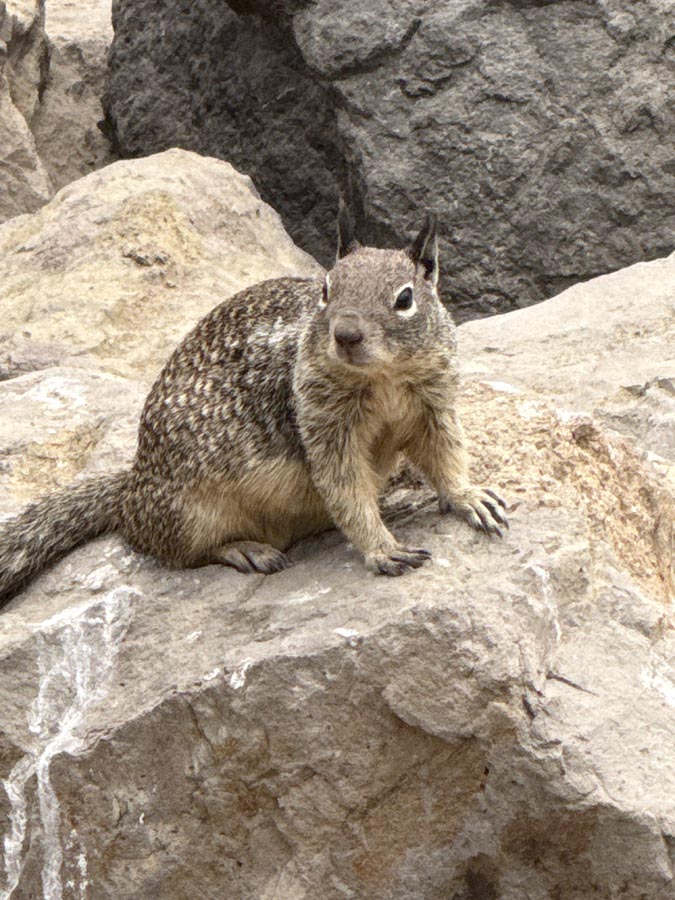
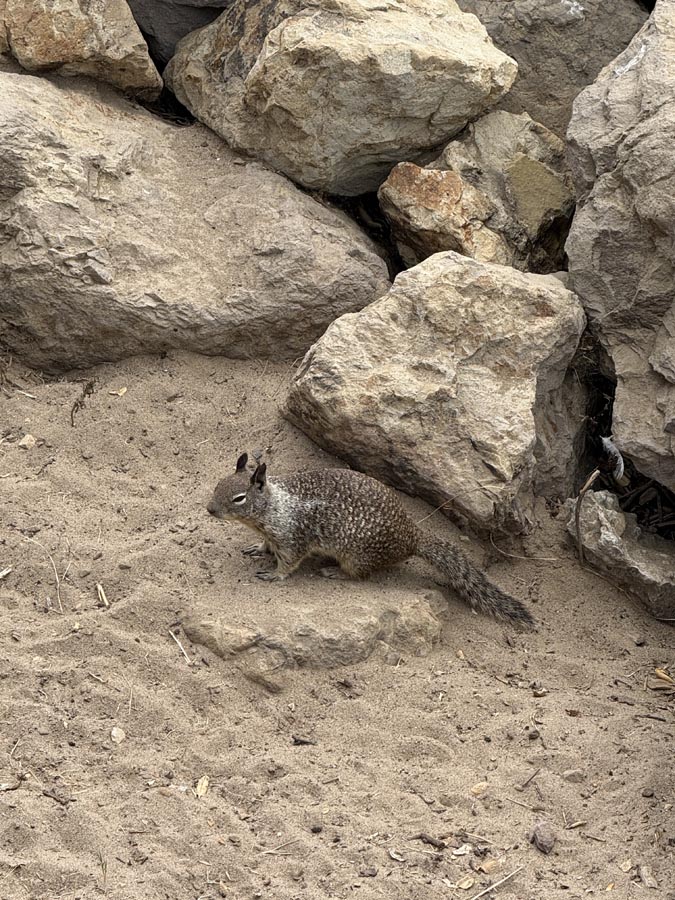
I recently visited Ventura Beach, California, for some ocean time. Along with the wonderful ocean waves, I spotted some quite attractive ground squirrels among the rocks. They were beautifully colored and wonderfully fluffy! Of course, I had to research them.
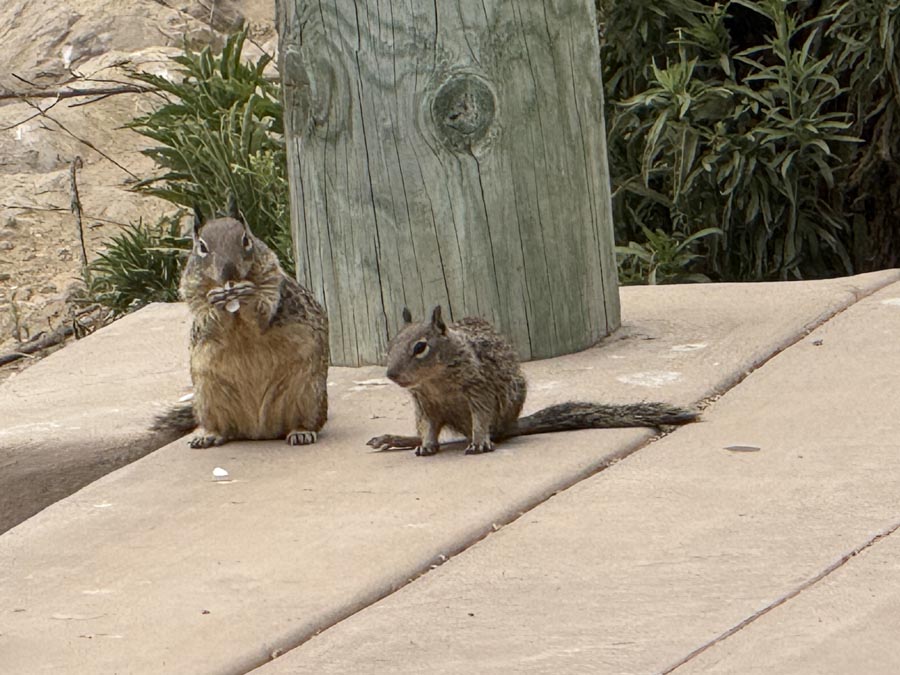
They turned out to be California ground squirrels (Otospermophilus beecheyi), also known as Beechey ground squirrels. Each female I saw seemed to have two youngsters and kept a very close eye on them. One errant youngster even got chastised quite severely when he wandered off too far!
Similarities to Desert Cousins
Like my desert ground squirrels, California ground squirrels live in burrows that they dig themselves. They tend to be homebodies, staying close to their burrow entrances.
These California squirrels have adapted well to living alongside people and will readily accept offered food. When they aren’t being fed by humans, they forage for natural foods like seeds, grains, nuts, acorns, fruits, and roots. To avoid the heat of the day, they prefer to be active early in the morning and late in the afternoon. If available, they will also eat insects such as grasshoppers, crickets, beetles, and caterpillars, and might even enjoy small eggs.
Once they’ve gathered their food, they stuff it into their cheek pouches to carry back to their burrows. These burrows can be quite elaborate, suitable for the living needs of anywhere from two to twenty individuals.
Rattlesnakes, Hot Tails, and Sand-Kicking
Just like our desert squirrels, California ground squirrels have to deal with rattlesnakes! Similarly, they may possess some natural resistance to rattlesnake venom. Mothers will even chew on shed snakeskins and then lick themselves and their pups to disguise their scent from predators.
Their defense behaviors include the popular sand-kicking tactic, where squirrels harass an attacking snake to gauge its size and activity level.
Even more amazing, a squirrel can super-heat its tail and swish it around! This attracts the attention of rattlesnakes, which hunt by detecting infrared heat. Waving a heated tail allows the squirrel to distract and dodge the snake while simultaneously alerting nearby squirrels that a predator is in the area.
Besides rattlesnakes, their predators include eagles, hawks, raccoons, foxes, badgers, bobcats, mountain lions, weasels, and domestic pets.
Important Participants in the Ecosystem
I find it interesting that the only habitat these squirrels don’t inhabit is the desert. Fields, pastures, grasslands, woodlands, beaches, and even urban, suburban, and agricultural areas are all suitable homes for them.
Adult ground squirrels are rather promiscuous. Females mate with multiple males, resulting in litters containing pups with different fathers. Males also mate with several females. In the wild, they can live up to six years, and up to ten years in captivity.
California ground squirrels play an important role in their environment by aerating the soil, dispersing seeds, regulating insect populations, and creating burrows that are used by many other species.
While some people view them as pests because they can damage agricultural crops or carry diseases like tularemia and plague (via fleas), I thoroughly enjoyed watching them. They are truly vital participants in California’s coastal ecosystem.
If my story of these Western ground squirrels has stirred your curiosity about our local desert species, check out my book, Squirrels of the Sonoran Desert! You’ll learn all about our three desert ground squirrel species:
- Round-tailed Ground Squirrel (Spermophilus tereticaudus) – these remind people of small prairie dogs, though they aren’t related!
- Rock Squirrel (Spermophilus variegatus) – these look similar to the tree squirrels of my Midwest youth.
- Harris’s Antelope Squirrel (Ammospermophilus harrisii) – these adorable squirrels look just like chipmunks.
Discover how our desert ground squirrels survive and thrive in Squirrels of the Sonoran Desert on Amazon!