One August night during monsoon season, my dog Max wanted to go outside. I always accompany Max when he steps out. He’s a 20-pound tasty tidbit, and in my neighborhood, he would make a very nice snack for a predator! Living in the Sonoran Desert, I share the area with Western Diamondback Rattlesnakes, so at night, I prefer to check the yard first.
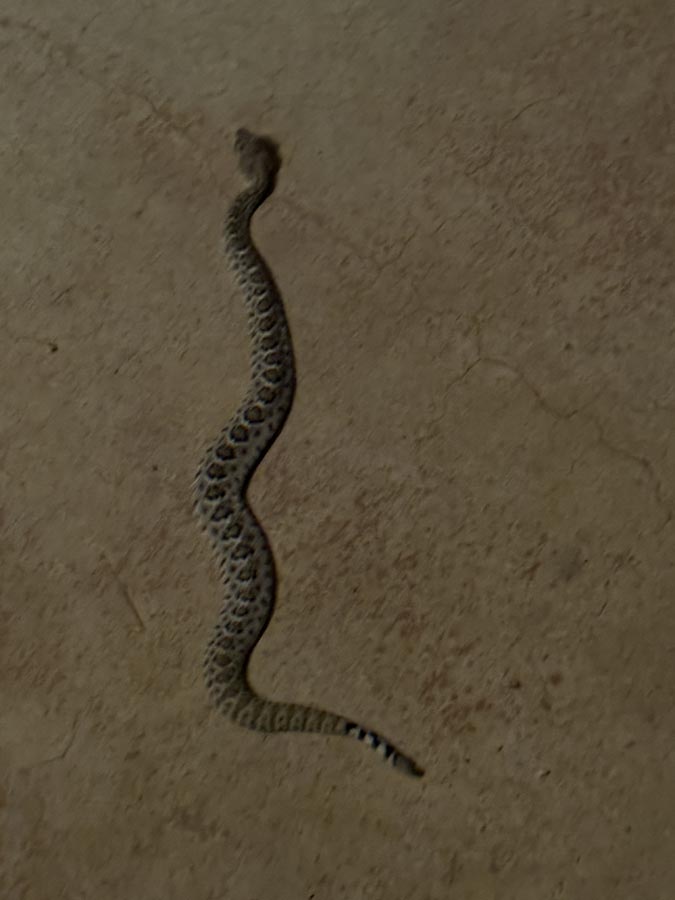
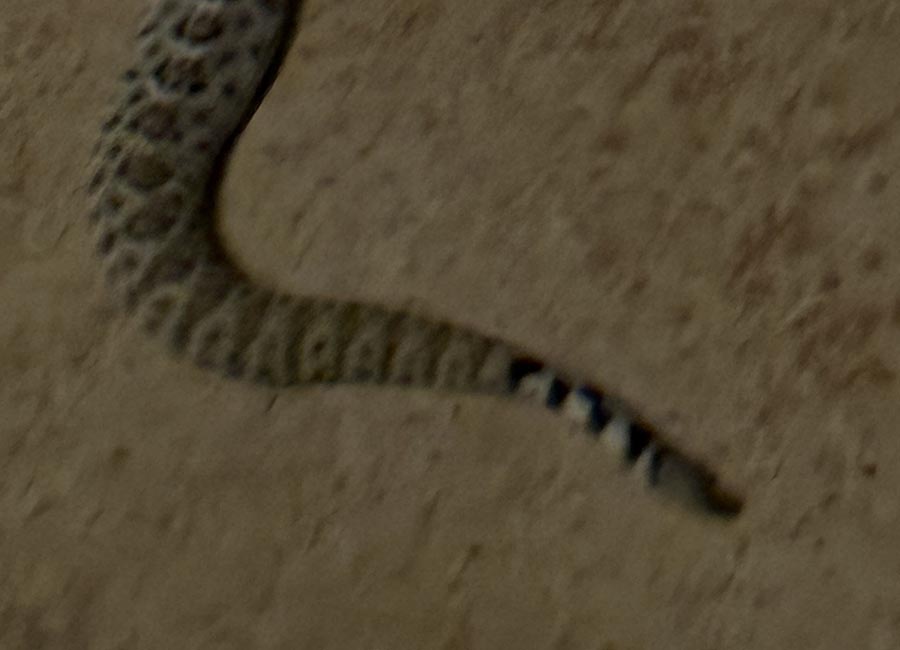
However, on this particular night, Max was in a huge hurry to reach his favorite spot. When I stepped out the door, I saw that he had accidentally trampled right over a small snake! I love reptiles, but I was still surprised to see one right on the patio. As I peered closer at this pencil-thin, foot-long creature, I noticed black and white stripes near the tip of the tail. But the tail only had a single segment—the “button” of a baby rattlesnake!
I had a mop drying nearby, so I tried using it to gently scoot the little rattler off the patio, but she wasn’t moving. Had Max squished her with his paws? Had she been dropped by an overhead predator? Whatever happened, there she was, without a single twitch from that cute little button. When Max started heading back inside, I safely covered the snake with the mop head. Once Max was clear, I set the mop aside, snapped a few close-up photos with my zoom, and wished the little snake a good life. A couple of hours later, I checked outside—the little one had slithered safely away.
The Secret Life of Newborn Rattlesnakes
Seeing this tiny creature made me curious about how far from home she had wandered. Mother rattlesnakes give live birth, but the offspring don’t take off immediately. The mother keeps them protected in the den until they undergo their first shed. After this shed (usually within 1 to 2 weeks), the young rattlers are ready to venture out into the world.
An interesting note: other female rattlers will actually help the mother by babysitting the young so she can go out and feed!
When I posted photos of this cutie-pie on Facebook, one question came up repeatedly: “Where is the mother?”
Initially, neonate rattlesnakes stay within a few yards to a couple hundred yards of their birth site. Was this baby born right near my patio? A few years ago, a mother rattler gave birth inside my garage! My garage became their winter hibernaculum, and the female offspring returned every fall to den. It would have worked out fine, but they decided to hang out right by the door I used to access my car. Every time I opened the door, the rattling chorus would begin! If they had just moved five feet down the wall, we could have lived in harmony. Over time, I gradually plugged all the entry holes into the garage, and they moved on. The last young one, “Baby Rattles,” was definitely not happy about being evicted. Since I have plenty of ground squirrel holes on my property, I advised her to go find one and make it her own. I’d still see her now and then over the years.
While I don’t think my garage is currently being used for birthing, I can’t be completely certain. I have plenty of great natural birthing dens on my property, so their new hibernaculum could be anywhere!
Sharing the Sonoran Desert
I was amazed, and somewhat surprised, by the comments on my social media post. I realized people couldn’t tell from the photo just how small the snake really was. Driven by hunger, young snakes wander away from their natal den to establish a new territory.
I was dismayed by how many people suggested I should have killed the baby rattler, or claimed I must not have much experience with snakes. Living in the Sonoran Desert alongside native vegetation, trying to eradicate rattlesnakes is both unrealistic and absurd. Staying aware and coexisting is truly the only choice.
In all the years I’ve lived in the Tucson area, I’ve usually only had one rattlesnake residing in my yard at a time. I also have resident kingsnakes and gopher snakes, along with long-nosed and night snakes. As a reptile enthusiast, I welcome them! Kingsnakes naturally keep rattlesnake populations in check. Plus, the desert has many other natural predators, coyotes, hawks, and owls. Even ground squirrels will turn the tables and eat a young rattler!
So, I won’t be harming any rattlers on my property. I will continue to share our environment and encourage others to learn more about these fascinating animals and the vital role they play in our ecosystem. Besides, that built-in warning system is incredible—I always appreciate a snake that politely lets me know it’s there!
Want to teach young readers about the vital role rattlesnakes play in our desert ecosystem? Check out my educational picture book, Don’t Make Me Rattle! to help kids discover why these venomous neighbors deserve our respect, not our fear.