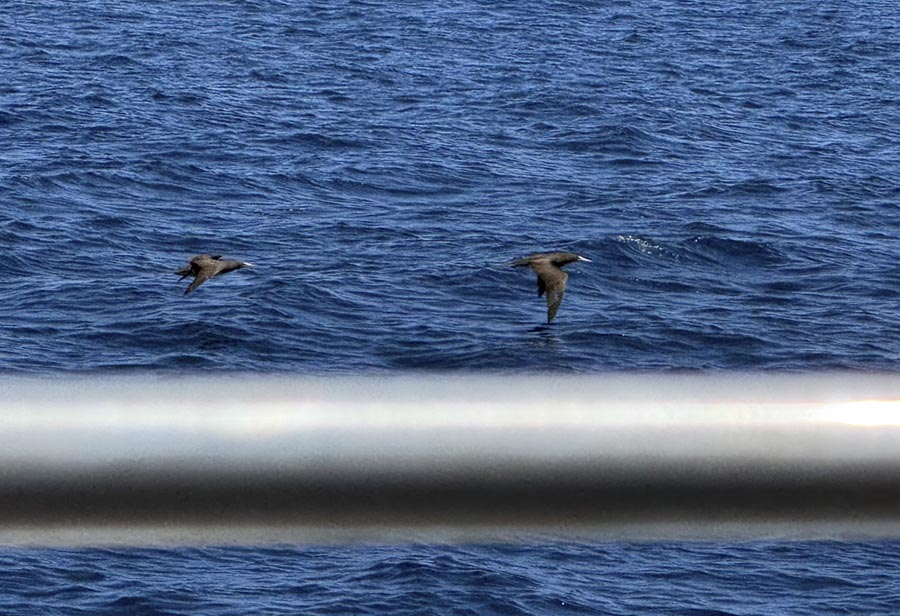
On a tour boat cruise to Channel Islands National Park, one of the bird species we observed was a pair of Brown Boobies! Brown Boobies this far north? I know this species from closer to the Equator—specifically, from my visits to Cayman Brac in the Cayman Islands. Brac is one of the Sister Islands, located just south of Cuba. In fact, Cayman Brac is the only island in the Cayman Islands where Brown Boobies nest, high on the eastern bluff and along Lighthouse Trail.
The crewman providing facts on our cruise commented that these boobies were much farther north than they should be; normally, these birds would be down in Mexico. When he pointed them out as Brown Boobies, I immediately knew they were out of place. This was actually my second time encountering a Brown Booby where it wasn’t supposed to be!
Unplanned Encounters and Shifting Ranges
My first encounter with a misplaced Brown Booby happened when a fledgling was found on Grand Cayman. Even though Brown Boobies nest on neighboring Cayman Brac, they cannot easily reach Grand Cayman due to the powerful trade winds blowing between the islands. It is physically impossible for them to fly to Grand Cayman from the Brac against those intense winds.
It is actually more natural for Brown Boobies in Mexico to travel north to the Channel Islands. With warming ocean temperatures, the boobies’ prey has become available farther north, prompting them to expand their range. Now, Brown Boobies are officially nesting in the Channel Islands, with the first successful chick hatching on Sutil Island.
Protecting Haven Grounds for Marine Birds
Brown Boobies are impressive, fairly large seabirds with a five-foot wingspan. Their upper body is a deep dark brown, contrasting with a clean white belly. They are also thrilling to watch while fishing, as they dive from heights of fifty feet to snatch fish right off the water’s surface.
The Channel Islands provide a vital habitat for seabird nesting. Brown Boobies lay their eggs directly on bare ground, lining the spot with small rocks, sticks, and sparse vegetation. Because these islands are protected from human encroachment, these modest nests can succeed. Fourteen different seabird species nest here safe from land predators while enjoying the abundant food supply provided by the rich marine environment.
These new nesting locations are critical because Brown Booby populations have experienced declines. Habitat degradation on islands and introduced predators have reduced nesting success in their traditional territories. In addition to moving north along the Pacific coastline, Brown Boobies are also being sighted farther north along the Atlantic coast.
Join the Booby Adventure!
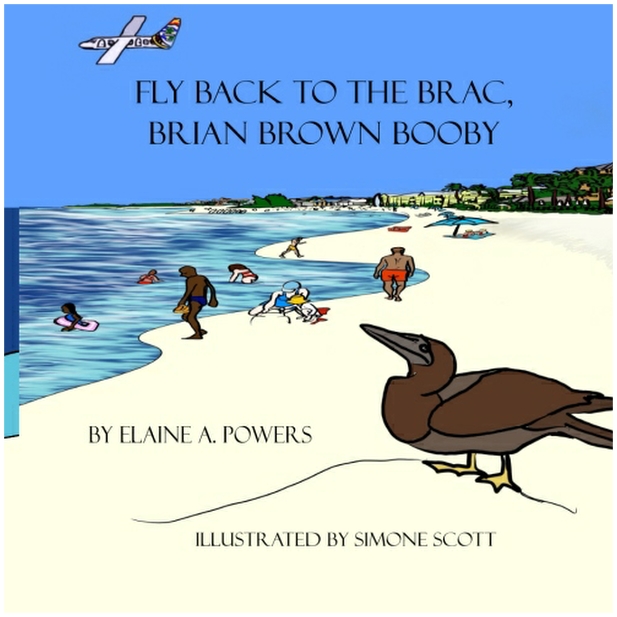
If you’d like to read an adventure tale based on a real-life booby rescue, check out my children’s book, Fly Back to the Brac, Brian Brown Booby by Elaine A. Powers and illustrated by Simone Scott!
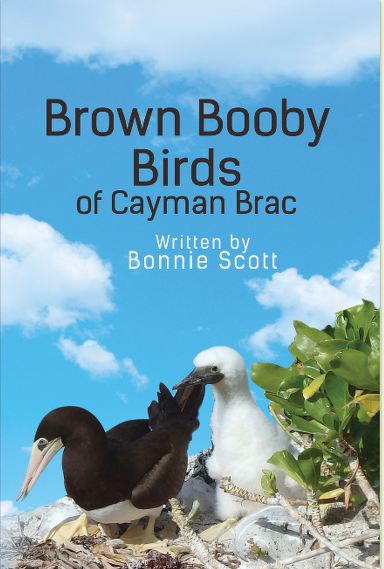
To learn even more about the nesting colonies on the bluffs, you can also explore Bonnie Scott’s book, Brown Booby Birds of Cayman Brac.